Grayson Construction handles fence installation in Miramichi for backyards, property lines, pools and farms, and repairs the ones that leaned over last winter. A fence here has to deal with deep frost, wet springs and wind off the bay, so we plan the posts before we talk about boards. Daniel J. Savard runs the company from Route 11 in Lower Newcastle, and we take on fence repair in Miramichi and new fences up to 100 km around the city.
Most problems show up in spring. The snow melts and a section that looked fine in November is leaning, a gate that closed easily now drags, or a row of boards has popped loose. Before anything gets replaced, it helps to find out why.
What you see
Usual cause
Usual fix
1One or two posts leaning
Frost pushed the post up or the base rotted
Reset or replace the post, set deeper
2A long section leaning the same way
Wind load on a solid fence with shallow posts
Reset posts, sometimes add a post between
3Gate drags or will not latch
Gate post moved or the gate frame sagged
Re-hang the gate, brace the frame, reset the post
4Boards loose or split
Fasteners rusted out, wood dried and cracked
Replace boards with proper fasteners
5Soft or crumbling post at the ground
Rot where wood meets wet soil
Replace the post
Repair
If most of the posts are sound, a repair is usually the better value.
Replace
If several posts are rotten at the base, the boards will not be far behind, and replacing the run makes more sense than patching it every spring.
Fence types
Privacy, Picket, Vinyl and Farm Fence
The right choice depends on what it needs to do: keep a dog in, keep the neighbours' view out, mark a line or hold livestock.
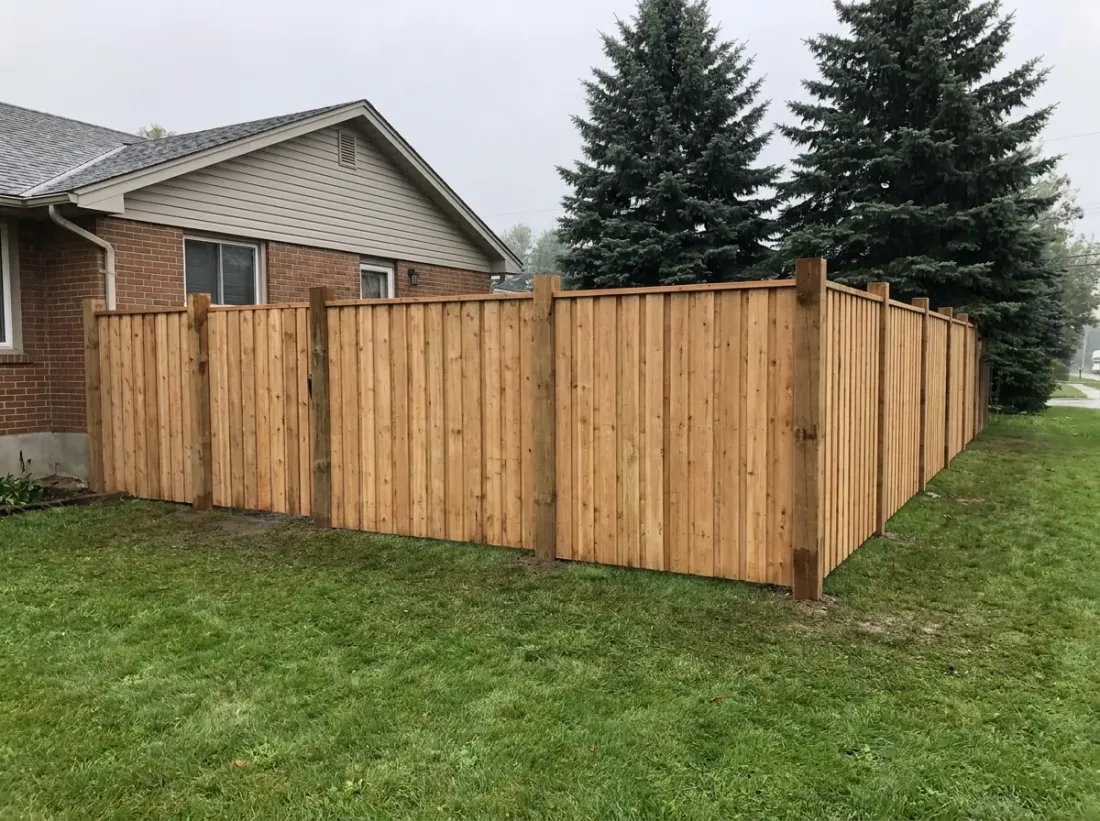
Privacy fence
Solid boards or panels, usually around six feet high, for backyards and pools. The most popular choice in town.
Picket fence
A lower, open fence for front yards and gardens. It marks the line without closing the yard in.
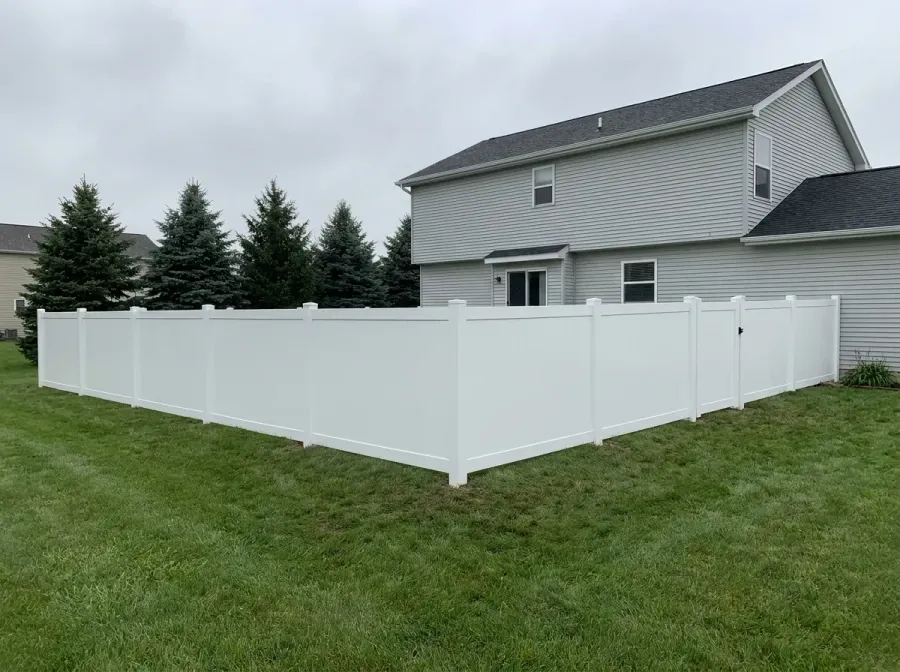
Vinyl fence
Privacy or picket styles in PVC that never needs painting or staining.
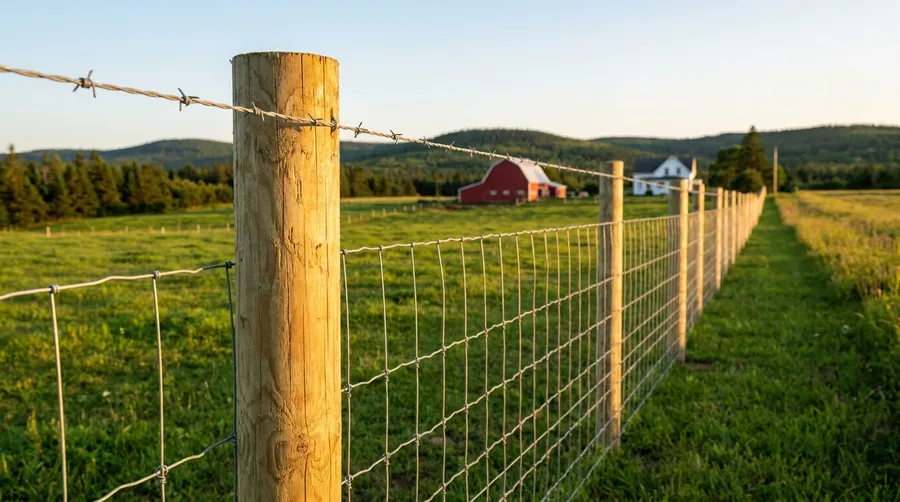
Farm fence
Wood or steel posts with page wire, barbed wire or rails, for pastures and property lines on rural land around Rogersville, Acadieville and the Southwest Miramichi.
Choosing a Fence Contractor in Miramichi
When you compare a fence contractor in Miramichi with another, ask the same questions of each: how deep the posts go and what they are set in, what fasteners are used, where the property line is and who confirms it, whether a permit is needed, and how the gate will be supported. A written quote that answers those questions is easier to compare than a price per foot alone.
The process
How a Fence Job Goes
Every job follows roughly the same order, whether it is fifty feet of picket or a quarter mile of farm wire:
01
Walk the line. We walk the route with you, talk about height, style and gates, and note where the ground is wet, rocky or sloped.
02
Confirm the line and what is underground. The property line should be clear before posts go in, and buried utility lines need to be located before any digging starts.
03
Price it. You get a price that says what is included: length, height, material, gates, post depth and removal of an old run if there is one.
04
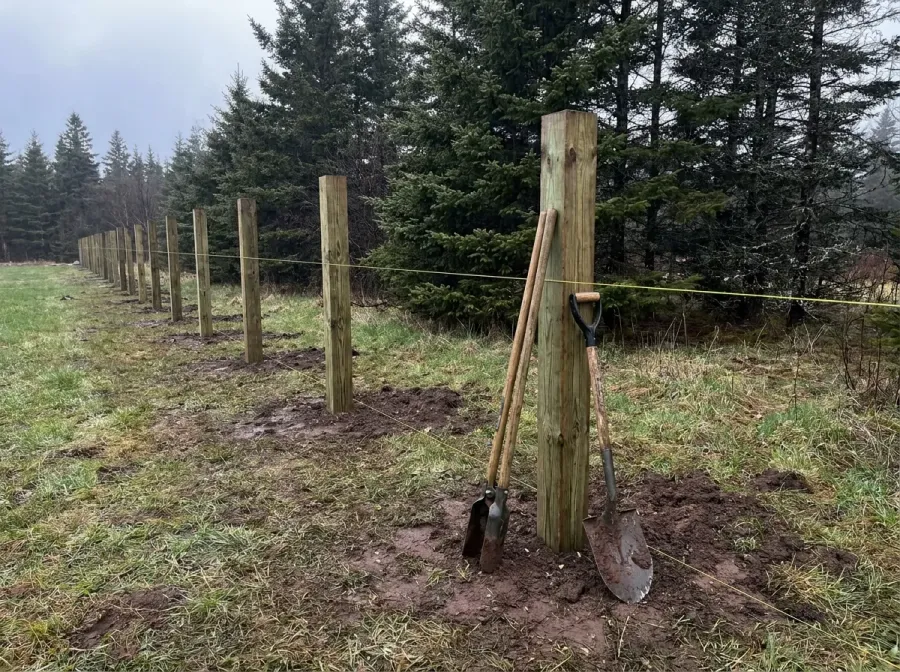
Set the posts. Corner, end and gate posts go in first and are lined up with a string line, then the line posts between them.
05
Build the rest. Rails, boards, panels or wire go on, gates are hung and adjusted, and the site is cleaned up.
SteppedFollows the ground
On a slope, the panels either step down in level sections or follow the ground. Stepping looks tidier on a short run. Following the slope leaves fewer gaps underneath on a long one, which matters if you have a small dog. It is worth deciding which you prefer before the posts go in.
Materials
Wood vs Vinyl in an Atlantic Winter
Wood and vinyl are the two most common materials here, and both can last if they are built right.
Compare
Pressure treated wood
Cedar
Vinyl
Upfront cost
Lowest
Higher
Higher
Maintenance
Stain or seal every few years
Stain or let it weather grey
Wash it now and then
Look
Warm wood, can be stained any colour
Natural wood, weathers silver
Clean, uniform white or colours
Cold weather
Can check and crack as it dries
Stays fairly stable
Becomes more brittle in deep cold, so impacts can crack it
Repairs
Easy to replace single boards
Easy to replace single boards
Panels replaced as units
Wood suits most backyards and anyone who likes the look. Vinyl suits homeowners who never want to stain a fence again. In both cases, the posts and how they are set matter more than the boards.
New pressure treated wood is often wet when it arrives, so it is usually best to let it dry for a season before staining. Cedar can be left to weather naturally or stained to keep its colour. Either way, a stain or sealer that soaks in will hold up better through freeze and thaw than a thick paint that can peel.
Posts
Fence Posts That Do Not Heave
Frost heave is the main reason posts lean in New Brunswick. Water in the soil freezes and expands, and if the bottom of a post sits above the frost line, the frozen ground grips the post and lifts it a little every winter. Wet clay soils and low spots that hold water in spring are the worst.
The Southwest New Brunswick Service Commission's building guidance puts the depth of frost in the province at about 1.2 metres, or 4 feet, in general. A post set well short of that depth is always at risk of moving.
A few things help posts stay put:
Depth. Setting posts deep enough that the bottom is below the frost.
Drainage. A layer of gravel under the post so water drains away from the base instead of sitting against it, especially in clay soil that holds water in spring.
Shape of the hole. A hole that is not wider at the top than the bottom, so frozen soil has less to grab.
Post material. Pressure treated posts rated for ground contact, or steel-reinforced posts for vinyl fences.
Gate posts take the most strain on any run, so they get the most attention.
Gates
Gates
A gate is the part of a fence people touch every day, and the part most likely to cause trouble. A gate sags when its frame racks out of square or when the post it hangs on starts to lean. Both problems get worse every winter.
A well-built gate has a frame braced corner to corner, hinges sized for its weight and a post that is heavier or set deeper than the line posts. Wide driveway openings often work better as a pair of gates than one long one. If you need a gate wide enough for a tractor, a trailer or a snowblower, mention it early so the posts and hardware are planned for it.
1Frame braced corner to corner
2Hinges sized for its weight
3Post heavier or set deeper than the line posts
Snow is the other thing to plan for. A gate that swings outward over a driveway or path can be blocked by a snowbank for months. Think about which way the gate should open, and leave enough room under it for the snow and ice that build up over a Miramichi winter.
Storms
Storm Damaged Fence Repair
Post-tropical storm Fiona in September 2022 knocked down fences across the Maritimes, and wind storms off the bay do the same on a smaller scale most years. Solid privacy fences take the worst of it, because they catch the wind like a sail.
On exposed lots near the coast, a fence with small gaps between the boards, or a shadowbox style, lets some wind through and puts less strain on the posts than a fully solid fence.
1
Make it safe
After a storm, start by making it safe: keep children and pets away from broken sections and sharp edges, and do not lean on posts that have moved.
2
Take photos
Take photos of the damage before anything is cleaned up, in case you need them for an insurance claim.
3
Check what is sound
Then we can look at which posts are still sound and which sections need rebuilding.
Timing
When to Build a Fence in New Brunswick
Fences need thawed ground. In the Miramichi area, the ground is usually frozen from late fall until spring, so most fences are built from late spring through the fall. Searches for fence work here jump in March and April, as soon as people see what the winter did.
That timing is why booking early pays off. If you call in winter or early spring, your job can be on the schedule before the busy season fills up. Repairs to a few posts or a gate can sometimes be done as soon as the frost is out of the ground.
A typical year
J
F
M
A
M
J
J
A
S
O
N
D
Plan and bookBuild season
Permits and Property Lines
In the Miramichi region, the Village of Blackville lists the construction or installation of a fence among the work that needs a building permit, issued through Planning Services at the Greater Miramichi Regional Service Commission. Rules on fence height and location can differ from one community to the next, so check with your local planning office before the fence is booked.
Know where your property line is before the first post goes in. If there is any doubt, a survey or the original survey pins settle it. Talking to the neighbours before the fence goes up avoids most disagreements later.
Around the Miramichi
Fences Around the Miramichi
Chatham · Newcastle · Douglastown
In Chatham, Newcastle and Douglastown, most jobs are backyard privacy fences and replacements for old runs that have been reset one too many times. Lots in the older parts of the city can be narrow, which makes knowing the property line even more important.
Outside the city the work changes. Farms around Rogersville and Acadieville need long runs of farm fence and wide gates for equipment. Along the coast near Baie-Sainte-Anne and Escuminac, fences take salt air and steady wind, so post depth and fasteners matter even more.
Building a deck as well? Our deck builder page covers that side of the yard, and the renovation cost guide explains what moves the price of a fence. A single loose board or a gate latch falls under our handyman services.
It depends on the length, height, material and ground. A cedar or vinyl privacy fence costs more per foot than a pressure treated picket fence, and rocky or wet ground adds work at every post. Gates add to the total. We price each fence after walking the line, and our cost guide explains what moves the number.
Q2
Can you build a fence in winter?
Usually not. Posts need to go into thawed ground, and in the Miramichi area the ground is frozen from late fall until spring. Most new fences are built from late spring to fall. Winter is a good time to plan and book, so the job is on the schedule before the busy season.
Q3
Why do fence posts lean after winter?
Most leaning posts are caused by frost heave. Water in the soil freezes and expands, and if the bottom of a post sits above the frost, the frozen ground lifts it a little each winter. Rot at the base and shallow posts on solid fences that catch the wind are the other common causes.
Q4
Vinyl or wood: which fence lasts longer?
Both can last a long time if the posts are set properly. Vinyl does not rot or need staining, but it becomes more brittle in deep cold and damaged panels are replaced as units. Wood needs staining or sealing every few years but is easy to repair one board at a time.
Q5
Do I need a permit for a fence?
Often, yes. In the Miramichi region, the Village of Blackville lists fence construction among the work that needs a building permit through the Greater Miramichi Regional Service Commission. Height and location rules vary by community, so check with your local planning office before the fence is booked.
Q6
Can you repair a fence instead of replacing it?
Often, yes. If most of the posts are sound, resetting a few posts, re-hanging a gate or replacing damaged boards can add years to a fence. If many posts are rotten at the base, replacing the whole run is usually better value than repairing it every spring.
Get a Price on Your Fence
Whether it is a new privacy fence, a farm fence along a property line or a section that leaned over the winter, tell us what you have in mind. For fence installation in Miramichi and communities up to 100 km around the city, we will walk the line with you, check the ground and give you a price before any work starts.