Lower Newcastle, Miramichi, NB · Serving up to 100 km around the cityMiramichi, NB

Windows and doors
Miramichi Window and Door Installation
Grayson Construction handles window installation in Miramichi for older homes that let the cold in and newer homes that just need a better door. We replace windows, install entry, patio and storm doors, and seal every opening against a New Brunswick winter. Daniel J. Savard runs the company from Route 11 in Lower Newcastle, and we work on both sides of the river and up to 100 km around the city. If you are comparing options for door installation in Miramichi as well, the same visit covers both.
Doors
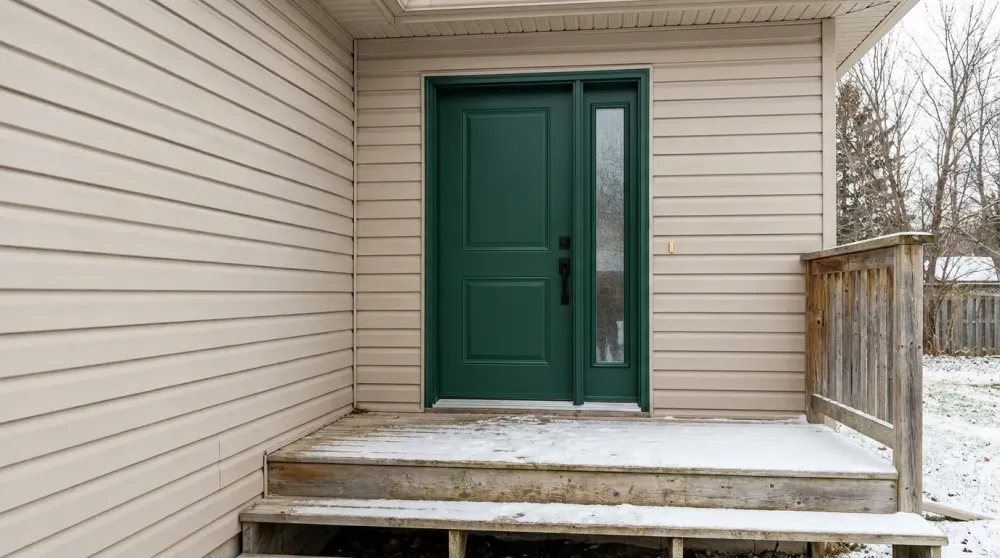
Door Installation in Miramichi
A door here has a hard job. It swings hundreds of times a week, takes driving snow on one side and a heated house on the other, and sits on a sill that sees ice from November to April. When a door sticks in January or lets light in around the edges, the problem is usually the frame, the sill or the way the unit was shimmed, not the slab itself.
That is why we look at the whole opening before we quote. We check whether the frame is square, whether the sill has rotted, and whether the rough opening is still the size it was when the house was built. Then we fit a new pre-hung unit, insulate the gap between the frame and the wall, flash the sill so water runs out instead of in, and adjust the hardware so the door closes with an even seal.
Front doors, back doors and doors into an attached garage all follow the same steps. The difference is the door you choose, which is covered further down this page.
Windows
Replacement Windows for a -30 Winter
Winters on the Miramichi are long and cold. At the Miramichi Airport, Environment and Climate Change Canada's 1991 to 2020 normals put the average January low at -15.3 °C, with about 291 cm of snow a year. The area's record low is -41.7 °C, set in January 1925. Wind off the bay makes it feel colder still.
- -15.3 °CAverage January low at Miramichi Airport, 1991 to 2020 normals
- 291 cmSnow in an average year
- -41.7 °CRecord low, January 1925
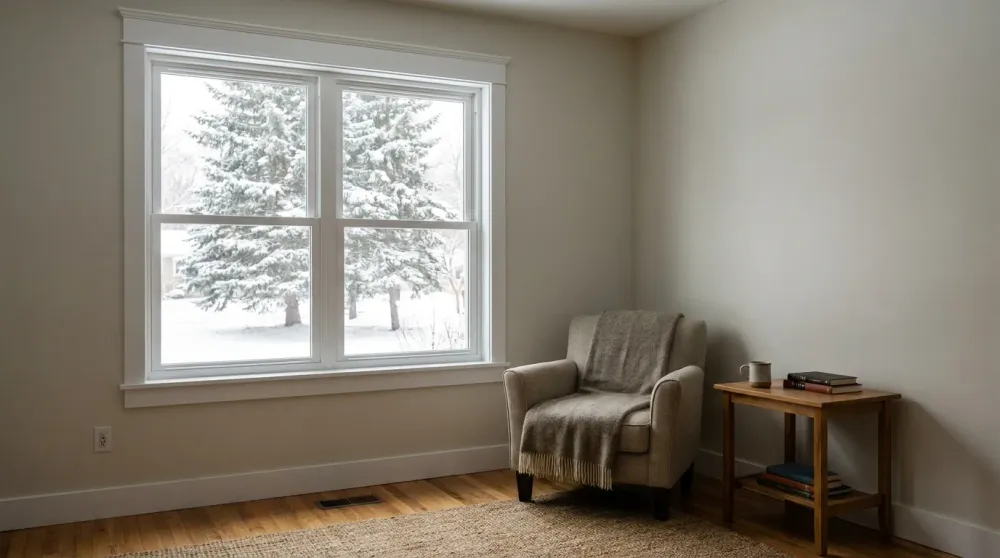
A window built for that climate does three things well: it keeps heat in, it keeps air from leaking around the sash, and it keeps the inside of the glass warm enough that moisture does not freeze on it. Older single pane windows and early double pane units do none of these well, and many mid-century homes in Chatham and Newcastle still have them.
Window Replacement in Miramichi: What the Job Involves
Most window replacement in Miramichi is a retrofit. The old sash and frame come out, the opening is checked for rot and squared up, and the new unit goes in level and plumb. The space around the frame is insulated with low-expansion foam, and the outside is flashed and sealed so rain and melting snow run away from the wall. Inside, new trim covers the gap.
Each opening is usually replaced and closed up the same day, which is why windows can go in for much of the year, not just in summer. If the siding is also due, it often makes sense to do both at once, since the wall around the window is already open. Our siding contractor page explains that side of the job.
Repair or replace
Drafty Windows: Repair or Replace
Not every drafty window needs to come out. Here is a simple way to tell the difference:
| What you notice | Likely cause | Usually |
|---|---|---|
| Cold air around the sash, but the glass is clear | Worn weatherstripping or caulking | Repair |
| Window will not lock or close tightly | Worn hardware or a frame that has shifted | Repair first, replace if the frame is out of square |
| Fog or moisture between the panes | The seal between the panes has failed | Replace the glass unit or the window |
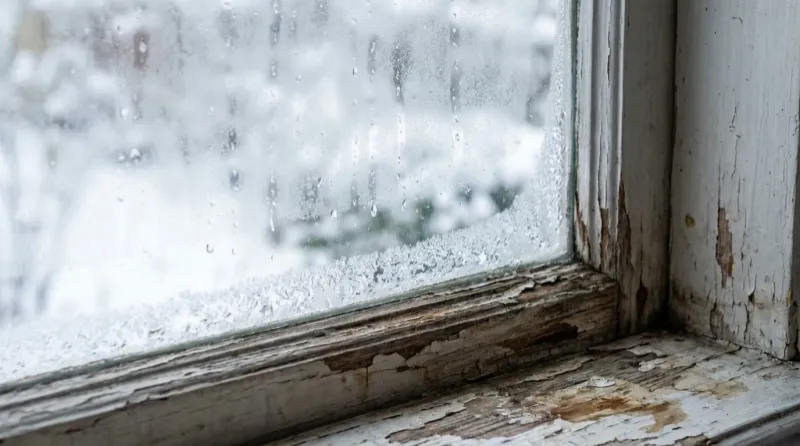
| Ice on the inside of the glass most mornings | Poor insulating value, often single pane | Replace |
| Soft or rotted wood at the sill | Water getting in for years | Replace, and repair the wall underneath |
Small fixes like new weatherstripping, caulking or a broken latch fall under our handyman services. If the seal has failed or the frame is rotting, replacement is the better use of money.
Window types
Vinyl, Casement, Double Hung and Triple Pane
Window choices come down to two decisions: how the window opens, and how many panes of glass it has.
How it opens
- Double hung: Two sashes that slide up and down. A common look on older Miramichi homes, and easy to clean from inside.
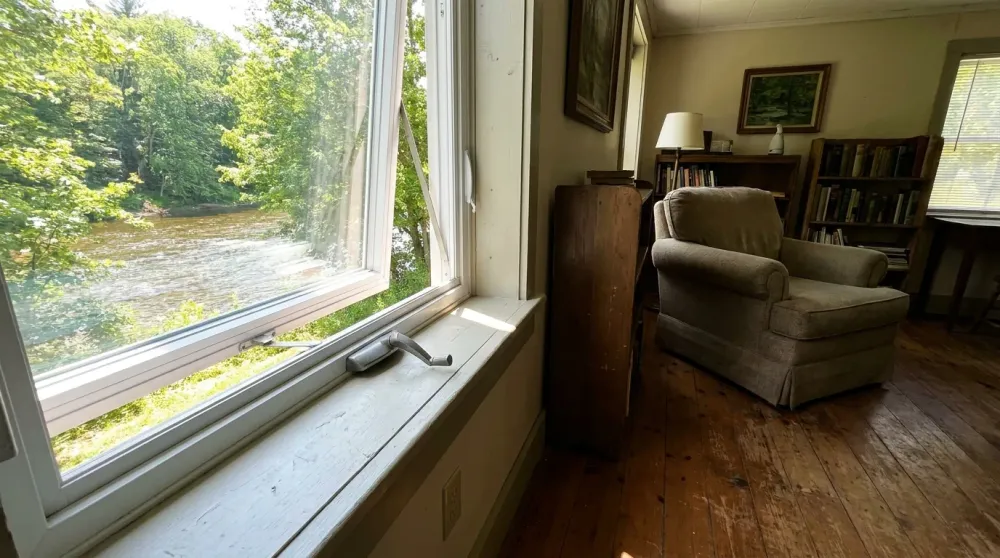
- Casement: Hinged on the side and opened with a crank. When it closes, the sash presses against the weatherstripping, which helps it seal well against wind.
- Slider: A sash that slides sideways. Simple and often a good fit for wide, low openings.
- Picture or fixed: Does not open at all. Good where you want light and a view, with no moving parts to wear out.
What it is made of
Vinyl frames are the most common choice in New Brunswick homes. They do not need painting, and they hold up to freeze and thaw. Wood and fibreglass frames are also available for homeowners who want a different look.
How many panes
Double pane glass with a low-E coating and argon gas between the panes is the standard for a new window. Triple pane adds a third layer of glass. It costs more and is heavier, but the inside pane stays warmer, which means less condensation and a more comfortable room on the coldest nights.
What the ENERGY STAR Label Means
In Canada, an ENERGY STAR certified window must meet Natural Resources Canada's specification. Under Version 5.0, in effect since January 1, 2020, a window needs a U-factor of 1.22 or lower, or an Energy Rating of 34 or higher. There is one standard for the whole country. The label also matters for the provincial rebate described below.
Doors
Entry Doors, Patio Doors and Storm Doors
- 01Entry doors: Steel and fibreglass doors with an insulated core are the usual choice for a front or back door. Fibreglass resists dents and does not swell with moisture. Steel is strong and often costs less.
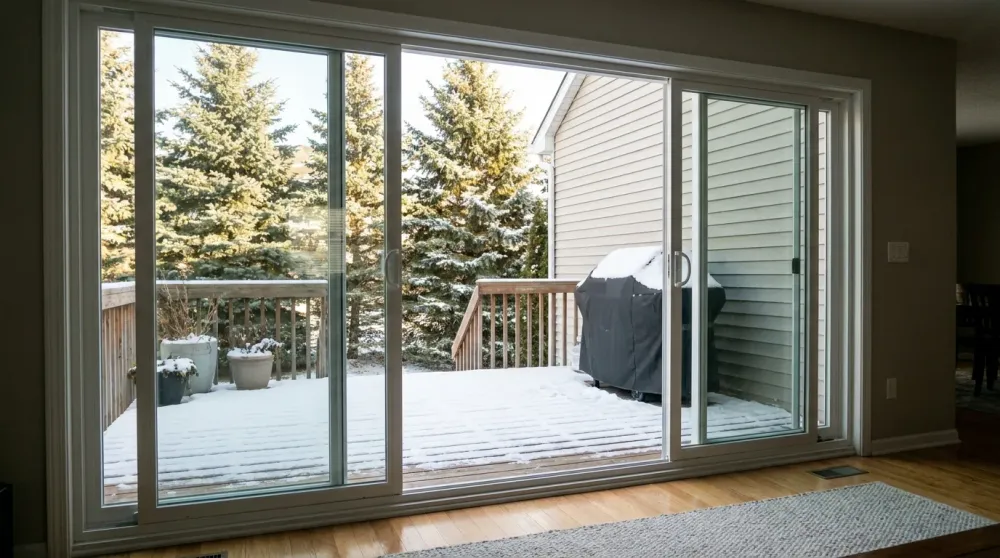
- 02Patio doors: Sliding patio doors save floor space, and hinged garden doors give a wider opening. A patio door that drags or lets in a draft usually has worn rollers or a sill that has dropped.
- 03Storm doors: A storm door adds a layer of protection in front of the main door and keeps driving snow off the entry. Many come with a screen panel you can swap in for summer.
When you request a price, tell us which doors you are thinking about and send a photo if you can. It helps us bring the right measurements to the first visit.
Rebates
Save Energy NB Rebates on Windows
NB Power runs a rebate program called the Total Home Energy Savings Program, through Save Energy NB. Windows, doors and skylights are listed among the eligible upgrades, and the program asks you to keep the ENERGY STAR stickers that come on new windows.
The program works in steps:
- 1
Register with Save Energy NB online or by phone.
- 2
A Certified Energy Advisor does a Home Energy Evaluation of your house before any work starts.
- 3
You complete the upgrades you choose within 9 months of that evaluation.
- 4
The advisor does a final evaluation, and you send in your receipts for the rebates.
The order matters. If the windows go in before the first evaluation, they may not count. Rebate amounts and rules change, so check the current details on the Save Energy NB website before you book.
Timing
When to Replace Windows in New Brunswick
Windows can go in for most of the year, since each opening is closed up the same day. Searches for new windows here peak twice: in March, when people notice drafts after a long winter, and in late summer, when they want the work done before the cold comes back. Booking a few weeks ahead of those peaks makes scheduling easier.
The signs that a window is due are the same ones listed above: fog between the panes, ice on the inside of the glass, frames that will not lock, and soft wood at the sill. If you are planning to apply for the rebate, build in time for the Home Energy Evaluation before the install date.
Changing the Size of an Opening
Replacing a window or door in the same opening is usually straightforward. Making an opening bigger or smaller is a structural change. In the Miramichi region, the Village of Blackville lists changes to window or door sizes as work that needs a building permit, issued through Planning Services at the Greater Miramichi Regional Service Commission. Check with your local planning office before the work is booked.
Wondering what windows and doors might cost? Our renovation cost guide explains what moves the price.
Around the Miramichi
Windows and Doors Around the Miramichi
The houses we work on tell you a lot about the window job before we arrive. Mill-era bungalows and storey-and-a-half homes in Chatham and Newcastle often still have their original openings, sometimes with the wood sills to match. Older farmhouses in Rogersville and Blackville can have openings that are no longer square after a century of settling.
On the coast, homes in Baie-Sainte-Anne and Escuminac and along the Acadian shore near Neguac take salt spray and nor'easters straight off the water, so flashing and sealing the outside of each opening matters even more there. Up the Southwest Miramichi, camps and cottages near Blackville and Doaktown are often closed up for months at a time, and a door that seals properly keeps out both weather and mice. Mini homes across rural Northumberland County often use their own window sizes, so we measure every opening before ordering.
Getting ready
Before Your First Visit
A few things make the first visit faster and the price more accurate:
- A count of the windows and doors you want replaced, and which rooms they are in
- Photos of any rot, fog between panes or ice build-up you have noticed
- Whether you want the same style or something different, like casement instead of double hung
- Whether you plan to apply for the Save Energy NB rebate, so the timing works
- Any other work on the list, such as siding, trim or a stuck interior door
Answers
Frequently Asked Questions
The price depends on the size and type of window, the frame material, double or triple pane glass, and the condition of the opening. A rotted sill or an opening that needs to be resized adds to the job. We price each job after measuring, and our renovation cost guide explains what moves the number.
It depends on the frame, the glass and how well the window was installed. The clearest signs a window is near the end are fog or moisture between the panes, which means the seal has failed, frames that no longer lock, and soft wood at the sill. Any of these is worth a closer look.
Yes. NB Power's Total Home Energy Savings Program, run through Save Energy NB, lists ENERGY STAR windows, doors and skylights among eligible upgrades. You need a Home Energy Evaluation before the work starts and a final evaluation after. Check the current rules on the Save Energy NB website before booking.
Yes. Each opening is usually taken out, replaced and sealed the same day, so the house is only open for a short time. Windows can go in for much of the year. Exterior caulking and some finishing work are easier in milder weather, so plan around the coldest stretches when you can.
Fog or moisture trapped between the panes of a double or triple pane window means the seal around the glass has failed. The insulating gas has leaked out and moist air has come in. Cleaning will not fix it. The glass unit or the whole window needs to be replaced.
Replacing a window in the same opening usually does not need a permit. Changing the size of a window or door opening is a structural change, and in the Miramichi region it is listed as work that needs a building permit. Check with your local planning office before the work is booked.
Get a Price on New Windows and Doors
Whether it is one drafty bedroom window, a front door that sticks every winter or every window in the house, tell us what you have in mind. For window installation in Miramichi and communities up to 100 km around the city, we will come out, measure every opening and give you a price before any work starts.