Lower Newcastle, Miramichi, NB · Serving up to 100 km around the cityMiramichi, NB

Handyman services
Your Miramichi Handyman
Grayson Construction is a handyman in Miramichi for the jobs that are too small for a renovation but too many to keep putting off. Drywall patches, trim and baseboards, mounting, assembly, caulking and the repairs you notice before winter all go on one list, and one visit works through it. Daniel J. Savard runs the company from Route 11 in Lower Newcastle, and our handyman services in Miramichi cover both sides of the river and communities up to 100 km around the city.
How it works
Handyman Services in Miramichi
Most people do not call for one thing. They call when the list gets long enough to bother them: a door that will not latch, a hole in the hallway wall, a shelf that needs hanging and a bit of trim that came loose last winter. The easiest way to work is to write everything down as you notice it and send us the whole list.
When we have the list, we sort it into what can be done in one visit and what needs materials ordered first. If something on it turns out to be a bigger job, like a soft floor or a window that needs replacing, we tell you so, and it becomes a separate conversation instead of a surprise.
A small-jobs visit is also a low-risk way to see how we work. You get to see how we show up, how we leave the place and whether the work holds up, before you trust us with a bathroom or a deck.
The work
What Counts as a Handyman Job
A handyman job is small, mostly carpentry and finishing, and does not change the structure of the house. Here is a rough guide to where the line usually falls:
Usually a handyman job
- Patching holes and cracks in drywall
- Replacing a length of trim or baseboard
- Mounting a TV, shelves or a handrail
- Adjusting doors that stick or will not latch
- Re-caulking a tub, sink or window
- Replacing a damaged section of siding
- Assembling flat-packed furniture
Usually a bigger job
- →Moving or removing a wall
- →Re-flooring a whole room
- →Replacing a window or exterior door
- →Rebuilding a deck or stairs
- →Tearing out a bathroom
- →Re-siding the whole house
- →Building an addition
Plumbing and electrical changes are different again. In New Brunswick, electricians and plumbers must be licensed, so our visit covers the carpentry side of a job, not new wiring or moved pipes.
Interior
Drywall, Trim and Baseboards
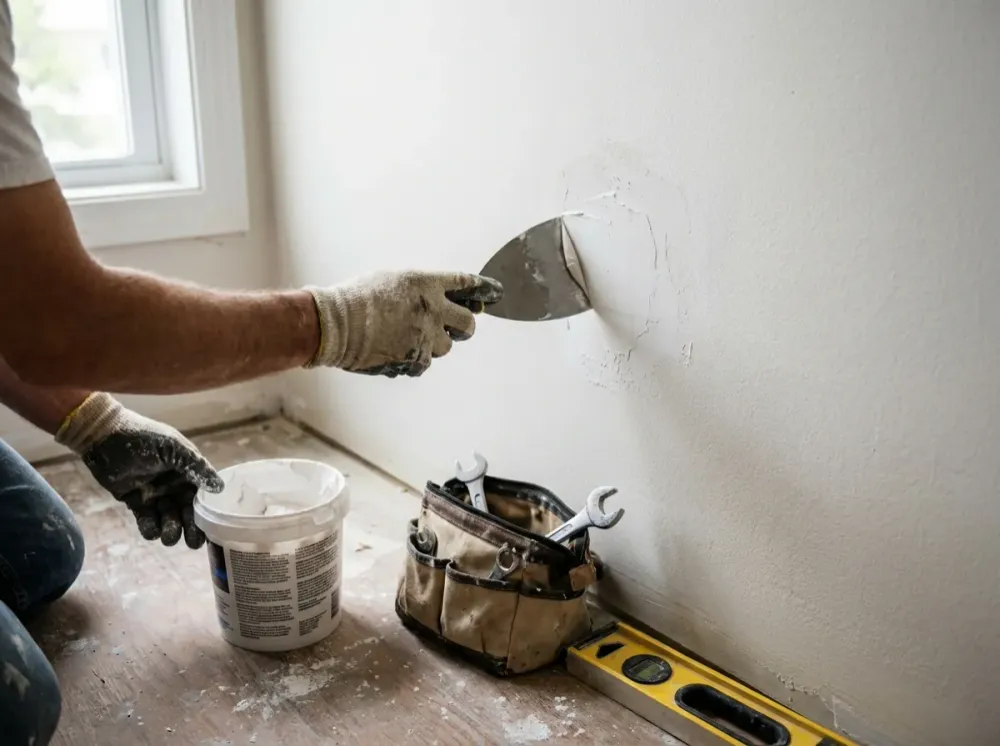
Drywall takes a beating in a busy house. Doorknobs punch through, furniture scrapes, and older homes crack along seams as the house moves through freeze and thaw every year. Many older Miramichi homes still have plaster walls, which crack differently and need a different repair than drywall, so it helps to know which one you have before the visit. A good patch is not just filling the hole: it is taping, mudding in thin coats, sanding and feathering the edges so the repair disappears once it is painted.
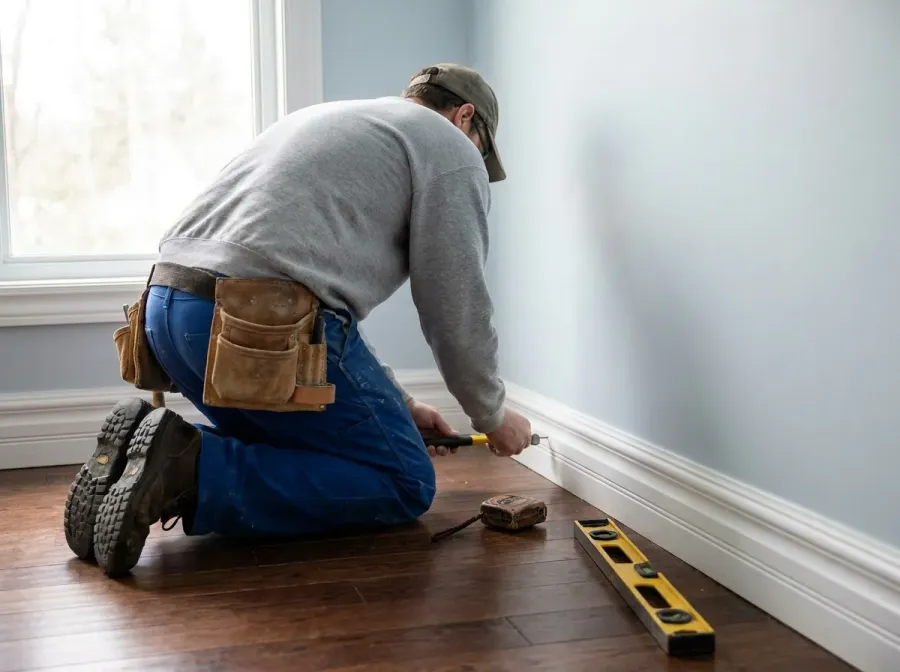
Trim and baseboards are the other common interior job. Pieces split, come loose or get damaged by water or a vacuum cleaner. In older homes the original trim profile is often no longer made, so we look for the closest match or replace a whole run so it looks even. Gaps where trim meets the wall or floor get caulked and painted so they stay closed.
Small Home Repairs That Add Up
Most small home repairs are quick on their own: a sticky door, a loose stair rail, a cabinet hinge, a cracked outlet cover, a gap around a window. Left alone, they add up to a house that feels tired. Fixed together in one visit, they make a house feel looked after. It is often the cheapest way to make a home ready to sell, ready for a new tenant or simply more pleasant to live in.
Installs
Mounting, Assembly and Installs
Some jobs are simple once you have the right tools and know what is behind the wall. Mounting a TV on drywall, a heavy mirror or a set of shelves needs to hit studs or use the right anchors. Grab bars and handrails need even more care, because they have to hold a person's weight when it matters most. Older plaster walls take extra care too: plaster cracks easily when drilled, and the studs behind it are not always where you would expect them to be.
Common installs include:
- 01TV wall mounts and floating shelves
- 02Handrails on stairs, inside and out
- 03Grab bars in bathrooms, anchored into solid backing
- 04Closet rods, shelving and storage systems
- 05Flat-packed furniture
- 06Door hardware, locks and weatherstripping
If a grab bar or handrail is part of a bigger plan to make the house safer, our bathroom renovation page covers accessible bathrooms in more detail.
Before winter
Small Repairs Before Winter
Fall is when the list gets serious. Once the snow comes, outside repairs get harder and drafts get more noticeable. A pre-winter visit usually covers:
- 1
Doors
New weatherstripping and door sweeps where you can see light or feel air coming in.
- 2
Windows
Re-caulking the inside trim and, while the weather allows, the outside seal around the frame.
- 3
Exterior trim and siding
Re-securing loose pieces before a winter storm pulls them off.
- 4
Railings and steps
Tightening loose railings and fixing soft treads before they are covered in ice.
- 5
Bathroom and kitchen caulking
Replacing cracked caulking before water gets behind it.
October and November are good months for this. Outside caulking and sealants need temperatures above freezing to cure properly, so the earlier in fall the outside jobs get done, the better. If a window turns out to need replacing rather than re-caulking, our window and door installation page explains what that job involves.
Selling or renting
Getting a House Ready to Sell or Rent
Small repairs matter most when someone else is about to look closely at the house. A buyer's home inspector or a new tenant notices the same things: doors that do not close properly, cracked caulking in the bathroom, holes where pictures used to hang and trim that has come loose.
None of these jobs is big on its own, but together they change the first impression. If an inspection report has already come back, send it along with your request and we can work through the items that fall under carpentry and finishing.
A pre-listing or move-out list often includes:
- Patching and sanding nail holes and dents so the walls are ready for paint
- Re-caulking tubs, showers and sinks
- Adjusting doors, cabinet hinges and closet doors
- Replacing damaged trim, baseboard or a broken stair rail
- Re-securing loose exterior trim or a damaged section of siding
Choosing
Handyman vs General Contractor: Which Do You Need
The short answer: if the job is small, does not change the structure of the house and does not need a permit, a handyman is usually the right call. If it involves several trades, structural changes, a permit or a larger budget, you want a general contractor.
| Handyman | General contractor | |
|---|---|---|
| Size of the job | A few hours to a day or two | Days to weeks |
| Trades involved | Mostly carpentry and finishing | Several, coordinated |
| Structural changes | No | Often |
| Permit needed | Rarely | Often |
| Example | Patch drywall, hang shelves, fix a door | Remodel a bathroom, build a deck |
Grayson Construction does both. That means a small job that turns into a bigger one does not have to change hands. If the first visit shows that a deck needs rebuilding or a bathroom floor is rotten, we can price that as a separate job.
Around the Miramichi
Handyman Work Around the Miramichi
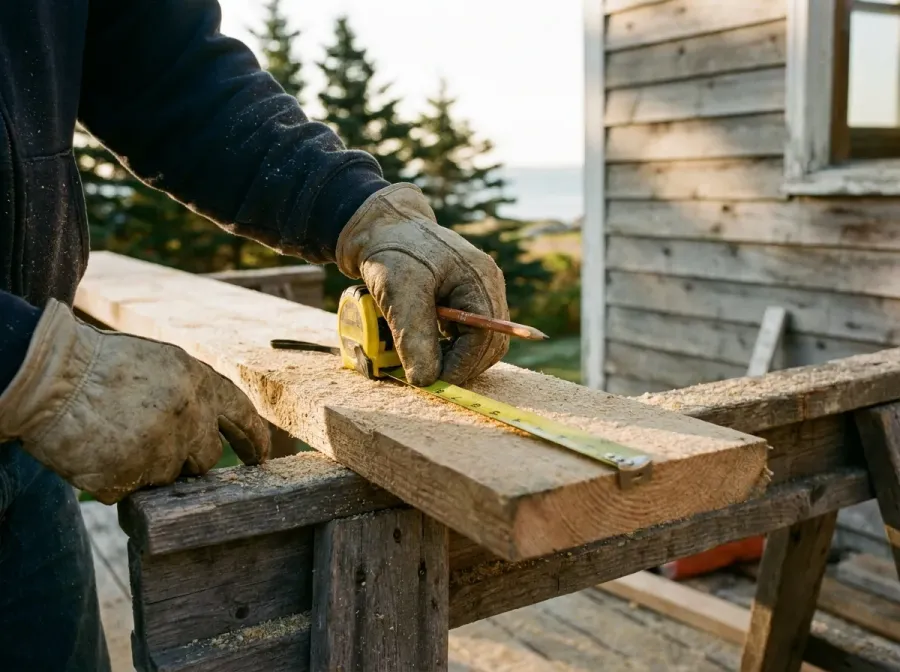
In Chatham and Newcastle, a lot of this work is in older homes: plaster walls that crack, doors that have shifted with the house and trim that has been painted so many times it no longer fits. In newer subdivisions it is more often mounting, assembly and touch-ups.
Outside the city, the list is usually longer and the visit less frequent. Camp owners up the Southwest Miramichi often want repairs done before the season opens or after it closes. On the coast near Neguac and Baie-Sainte-Anne, wind and salt air loosen exterior trim and siding faster. The farther the drive, the more sense it makes to group every small job into one visit, so send the whole list when you get in touch.
Wondering what a visit might cost? Our renovation cost guide explains what moves the price.
Answers
Frequently Asked Questions
01What does a handyman do?
A handyman handles small repairs and installs around the house: drywall patches, trim and baseboards, mounting TVs and shelves, assembling furniture, adjusting doors, caulking and minor exterior repairs. The work is mostly carpentry and finishing, and it does not change the structure of the house or involve new wiring or plumbing.
02Is a handyman cheaper than a contractor?
For small jobs, usually yes, because there is less planning, fewer trades and no permits. For larger work, a general contractor is the better fit, since the job needs coordination, materials and sometimes inspections. Grouping several small jobs into one handyman visit is the most cost-effective way to get them done.
03Can a handyman do electrical or plumbing work?
Not beyond very minor work. In New Brunswick, electricians and plumbers must be licensed, and plumbing work needs a permit bought by a licensed plumbing contractor. A handyman visit covers the carpentry and finishing side of a job, like patching the wall after a licensed trade has done their part.
04Do you take on small jobs?
Yes. Small jobs are what handyman visits are for. A single loose railing is worth fixing, but most people get the best value by listing everything they have been meaning to get to and having it done in one visit, especially outside the city where the drive is longer.
05What should I put on my handyman list?
Write down everything you notice: doors that stick, drafts, cracks, loose trim, things to mount or assemble, and any caulking that has cracked. Note the room and add a photo if you can. A complete list helps us bring the right materials and get more done in one visit.
06When is the best time to book a handyman?
Any time of year works for inside jobs. Fall is the busiest season for outside repairs, because weatherstripping, caulking and loose exterior trim are easier to fix before the snow. Booking in September or early October gives the best chance of getting outside work done before winter.
Send Us Your List
Whether it is one sticking door or a page of small jobs you have been meaning to get to, tell us what is on the list. As a handyman in Miramichi and communities up to 100 km around the city, we will look at the whole list, tell you what can be done in one visit and give you a price before any work starts.